


Bring composition and long-lasting blooms to your indoor space our outdoor garden with the calla lily.
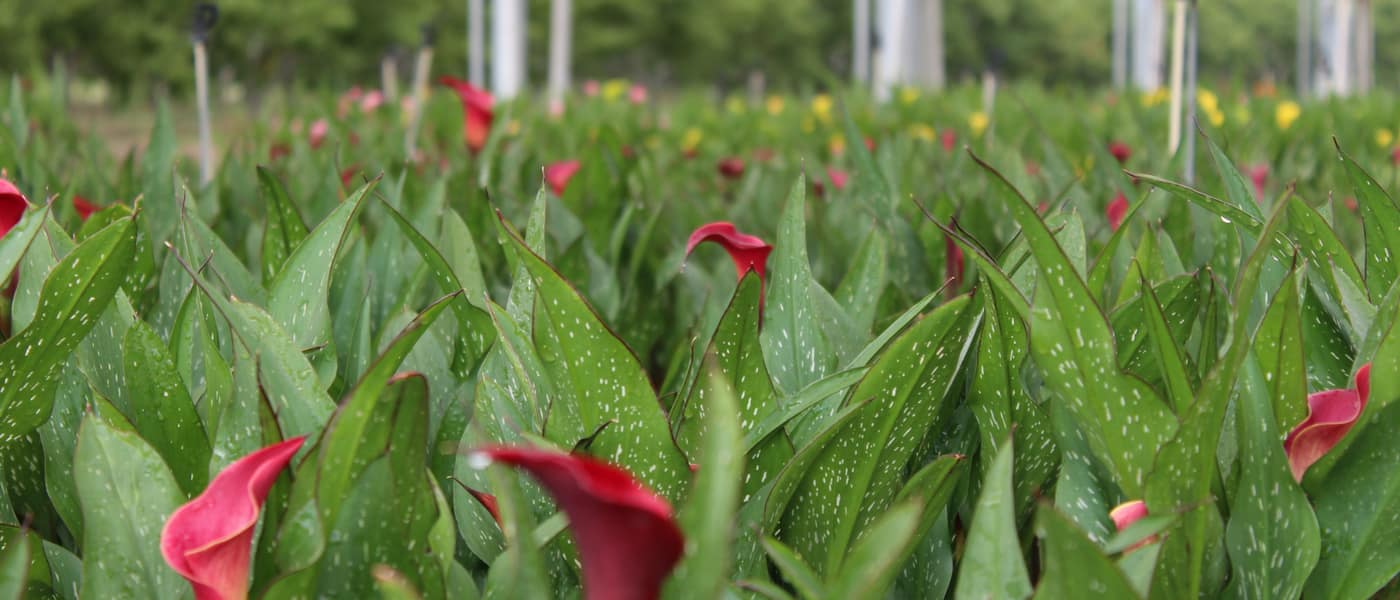
Calla lilies are valued for their clean form, long-lasting blooms and adaptability as both indoor and outdoor plants. They are a popular choice for plant lovers because they preform well, respond predictably to care, and offer strong visual impact without complex maintenance. Calla lily plant care depends on light exposure, moisture control, soil structure, and seasonal rest. This guide focuses on calla lily care indoors, with outdoor care considerations for all growing conditions, covering light, watering, soil, dormancy and blooming issues. See all of our guides outlining care tips for all our products.
Calla Lily Basics and Growing Overview
What Is a Calla Lily and How It Grows
A calla lily usually follows a predictable cycle. It pushes leaves first, then produces flower stems topped with spathes. After flowering, it slows down and prepares for dormancy. Many indoor growers misread this slowdown as a problem and respond by watering more or feeding more. That response often creates the exact issue they fear, especially rot.
Caring for your calla lily works best when you support the cycle instead of fighting it. Growth and flowering happen during active months. Rest happens after. If you plan for the rest period, the next season’s growth and bloom quality improves.
Can Calla Lilies Be Grown Indoors and Outdoors Successfully?
Yes. Calla lilies adapt well to indoor and outdoor environments when you match care to the environment.
Indoor calla lily care gives you control. You can manage light placement, soil moisture, and temperature swings. Outdoors, the plant benefits from stronger natural light and warm soil, but it also deals with pests, heavy rain, and temperature drops.
Most problems show up in both settings for the same reasons:
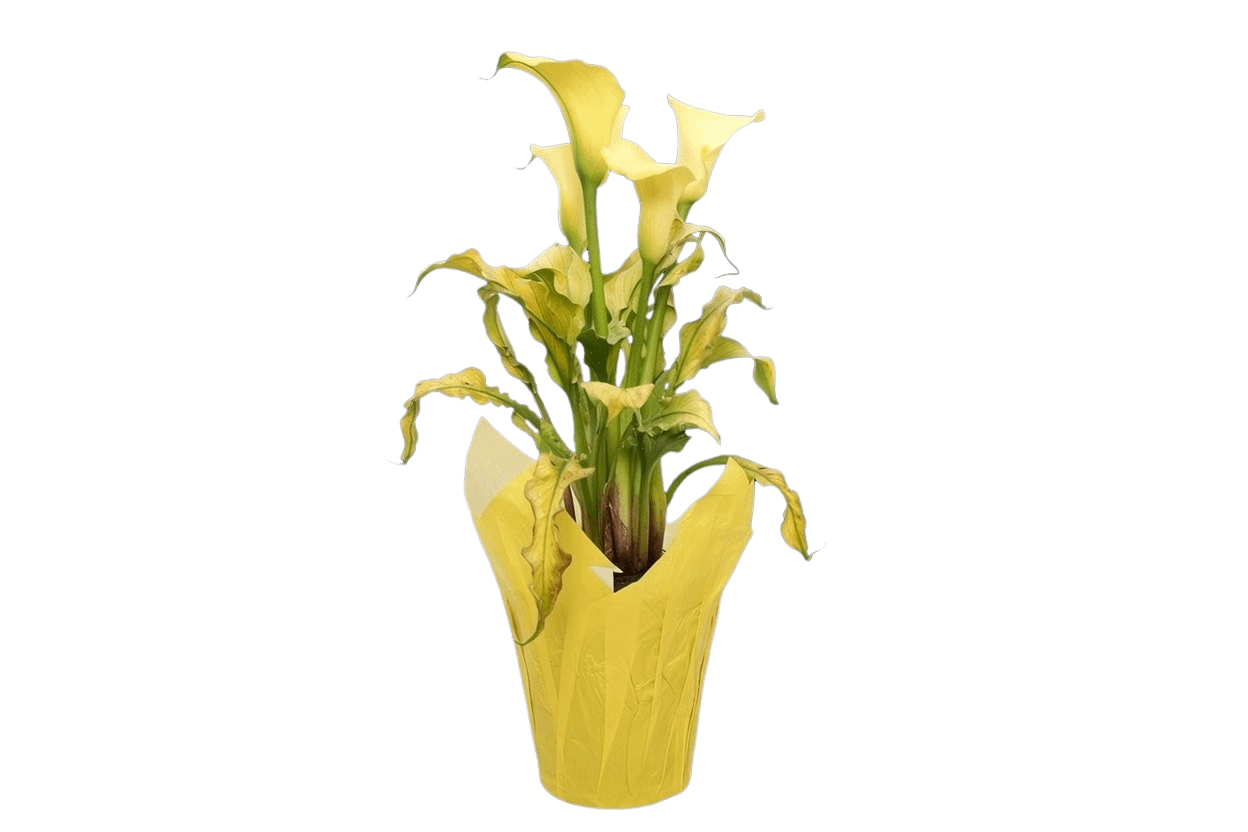
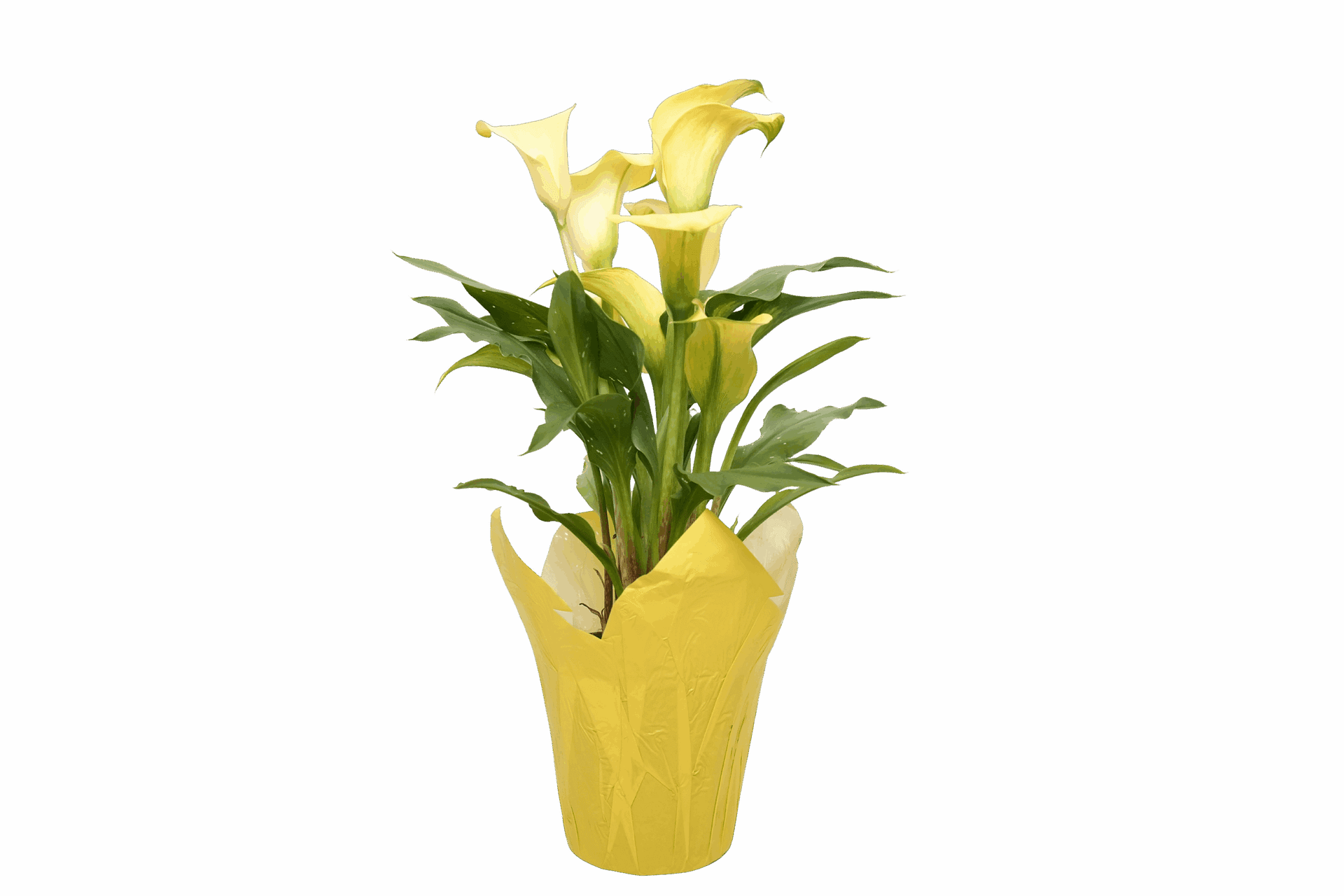
Watering issues that cause yellowing leaves and wilting
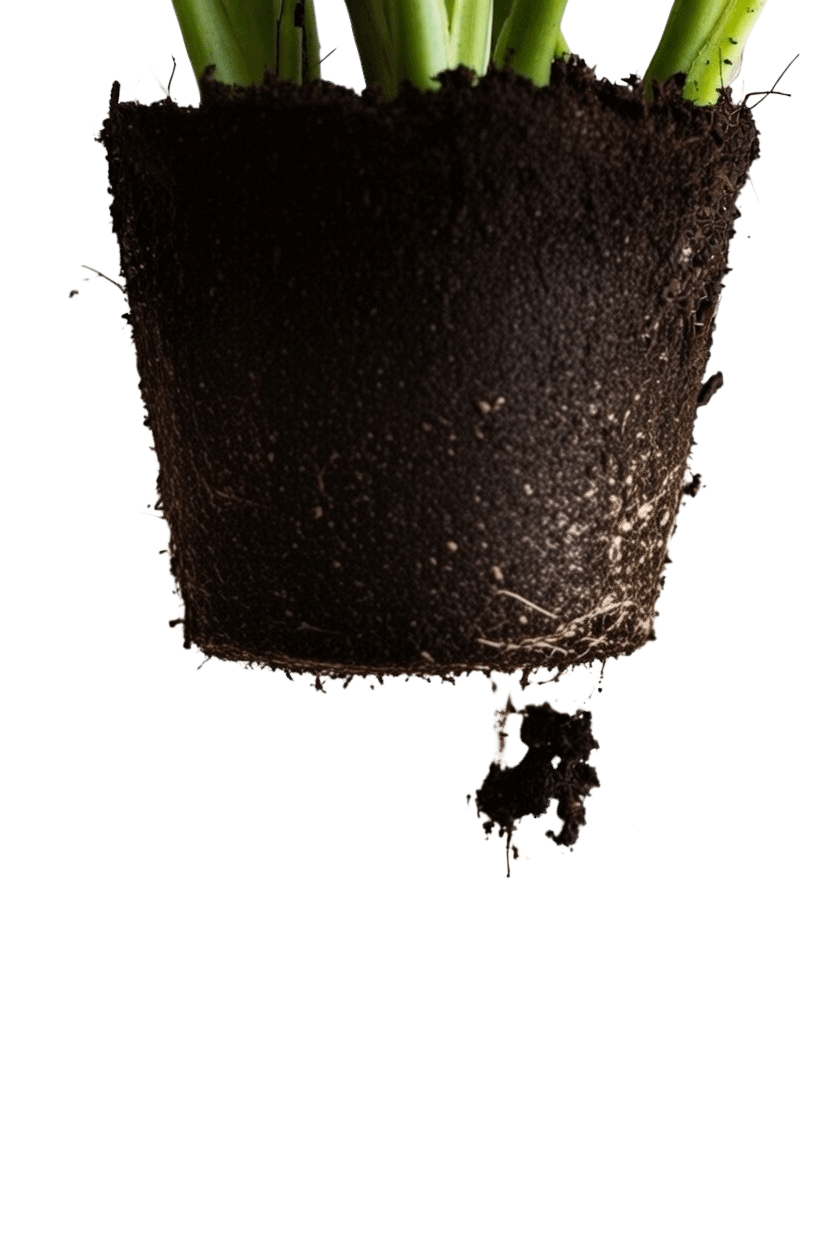
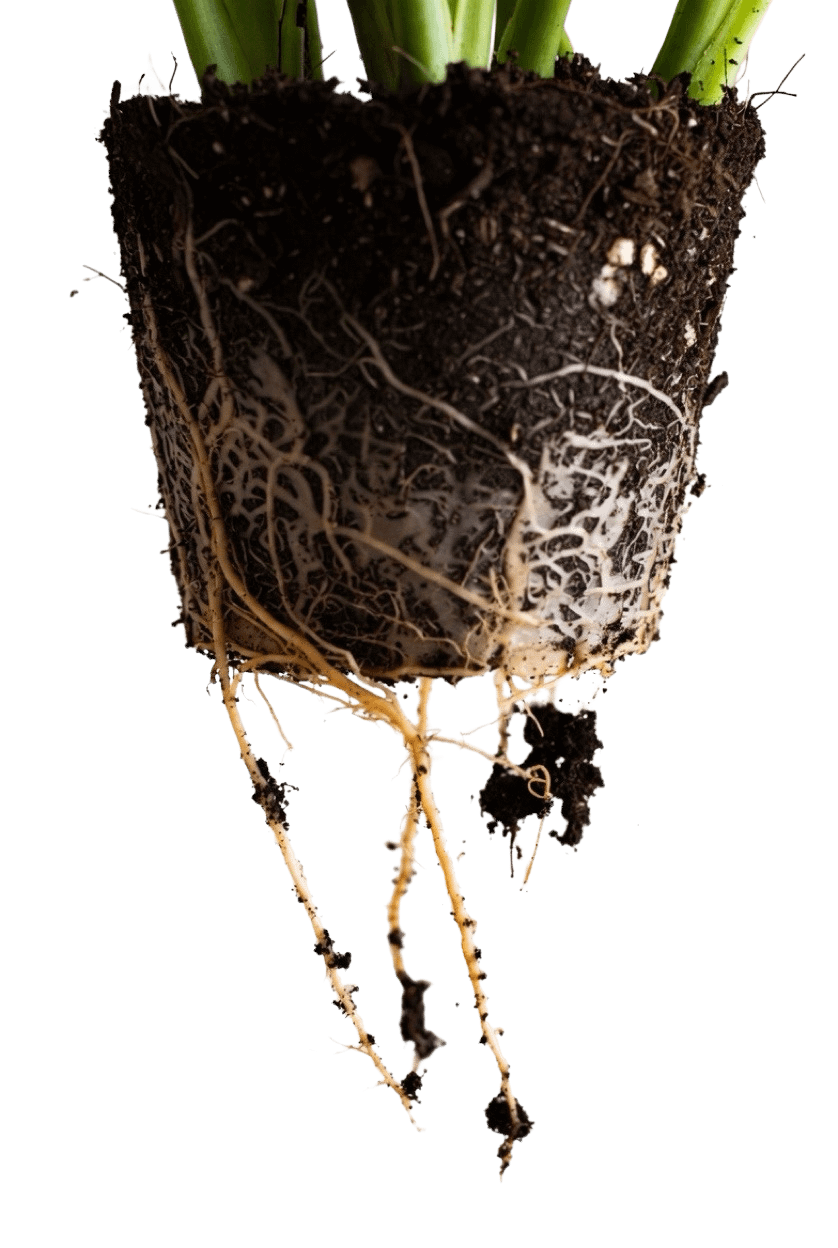
Poor drainage that keeps rhizomes wet (root rot)
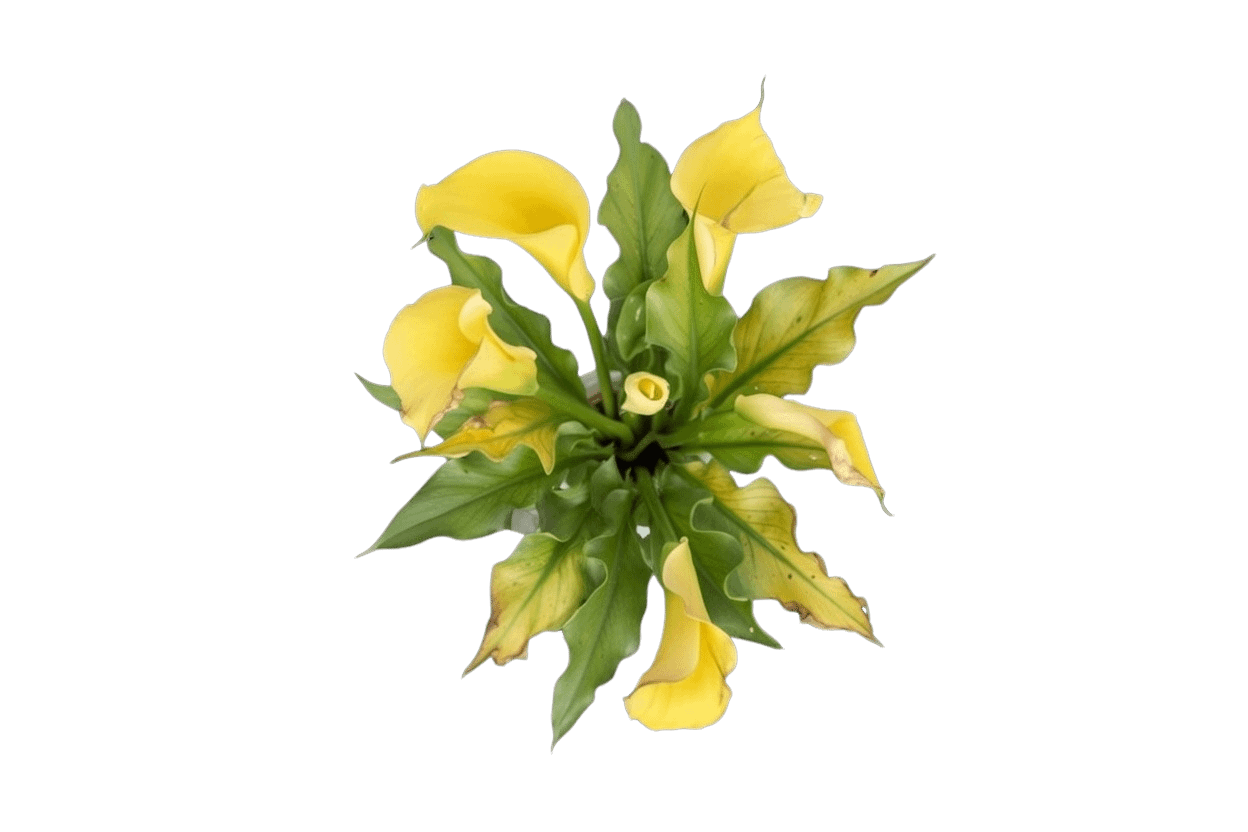
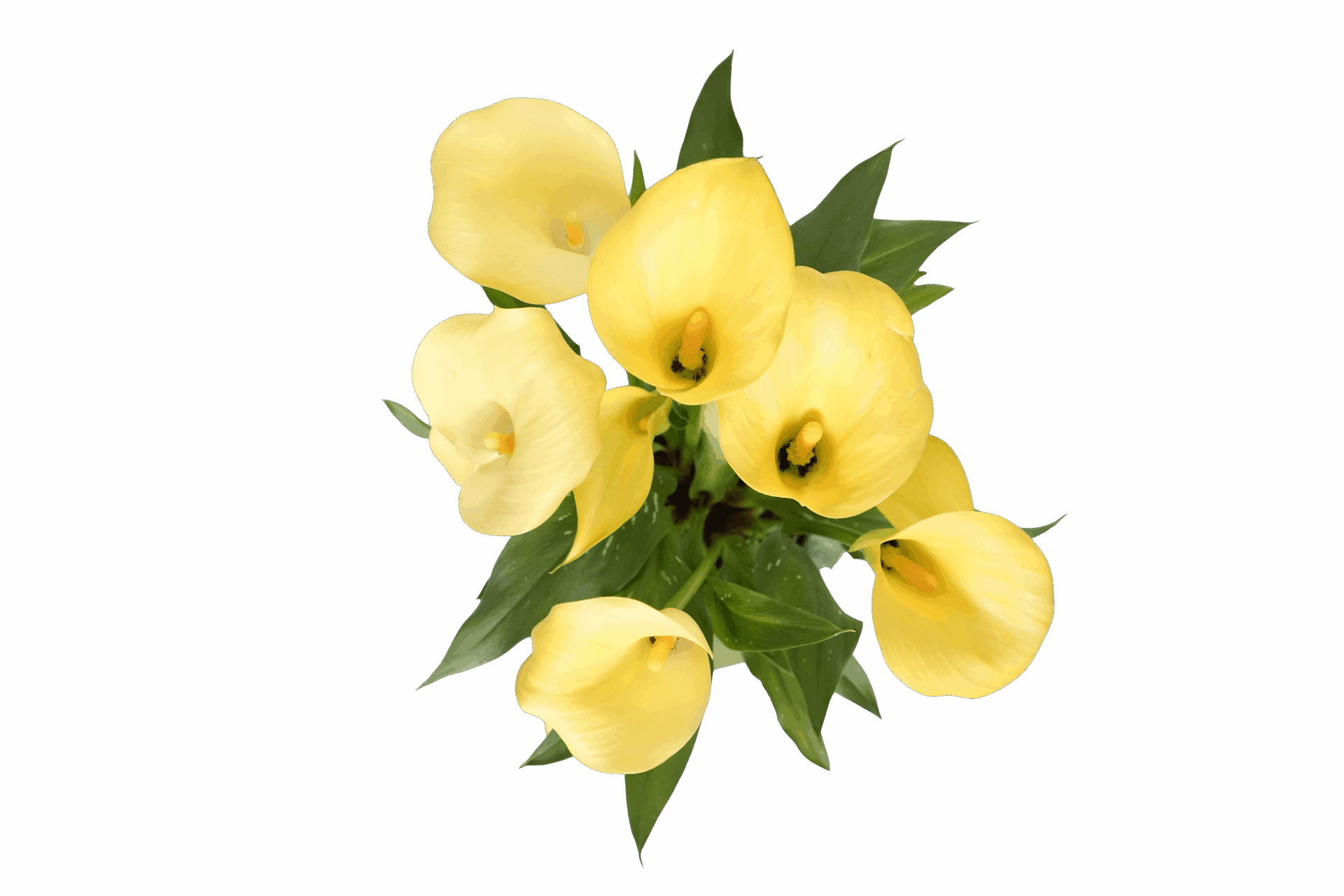
Insufficient light that reduces blooms
Calla Lily Care Indoors
Light Placement That Supports Blooming
Calla lily care indoors relies heavily on light quality. While plants may survive in lower light, flowering requires bright, indirect exposure for at least six hours per day. East- or west-facing windows provide reliable light, while south-facing windows may need filtering to prevent leaf scorch.
Too little light causes stretched stems, weak growth, and reduced blooms. Too much direct sun leads to yellowing leaves and scorched edges. Correcting light placement often resolves flowering and watering issues more effectively than fertilizer adjustments.
How long will a potted Calla Lily last?
A potted calla lily can last up to 2-3 months, with proper care and conditions.
How Often to Water Calla Lilies Indoors
Calla lily care indoors succeeds or fails on watering habits. Indoor plants suffer when soil stays saturated, but they also suffer when soil dries hard and stays dry. Aim for steady moisture and fast drainage.
| INDOOR WATERING GUIDELINES |
|---|
| Water when the top 1–2 inches of soil feel dry |
| Keep soil moist, not soggy |
| Empty saucers after watering |
| OVERWATERING SIGNS |
|---|
| Yellowing leaves that feel soft |
| Limp stems and constant wilting despite wet soil |
| Sour odour from the potting mix |
| UNDER-WATERING SIGNS |
|---|
| Droop that improves quickly after watering |
| Dry edges and crisp leaves |
| Buds dropping before opening |
Season matters. In spring and summer, indoor calla lilies grow faster and use more water, especially near a bright window. During darker winter months, growth slows and watering frequency should drop. If you continue summer watering into winter, yellow leaves and rot become common.
Use soil feel as your trigger, not the calendar.
Ideal Temperature and Humidity for Calla Lilies
Temperature targets:
Indoors: 18–24°C (65–75°F) | Outdoors: frost-free conditions only.
Cold slows growth and triggers dieback. Frost damages foliage. Grow in containers or treat as seasonal.
Humidity helps, but it is not a excuse to overwater. Calla lilies tolerate normal indoor humidity, but dry air from heating vents can stress foliage and dry soil unevenly. Keep plants away from direct heat and cold drafts.
Outdoor Calla Lily Plant Care
Sun Exposure and Site Selection
Outdoor calla lily care begins with proper site selection. Plants perform best in sun with some protection from harsh afternoon heat. Dense shade reduces blooms and keeps soil wet longer, increasing rot risk.
Choose locations with loose, well-draining soil and avoid low spots where water collects. Calla lilies tolerate moisture but not stagnant, airless soil. Containers work well outdoors when drainage holes allow excess water to escape.
Outdoor Watering: Keeping Moisture Stable Without Saturation
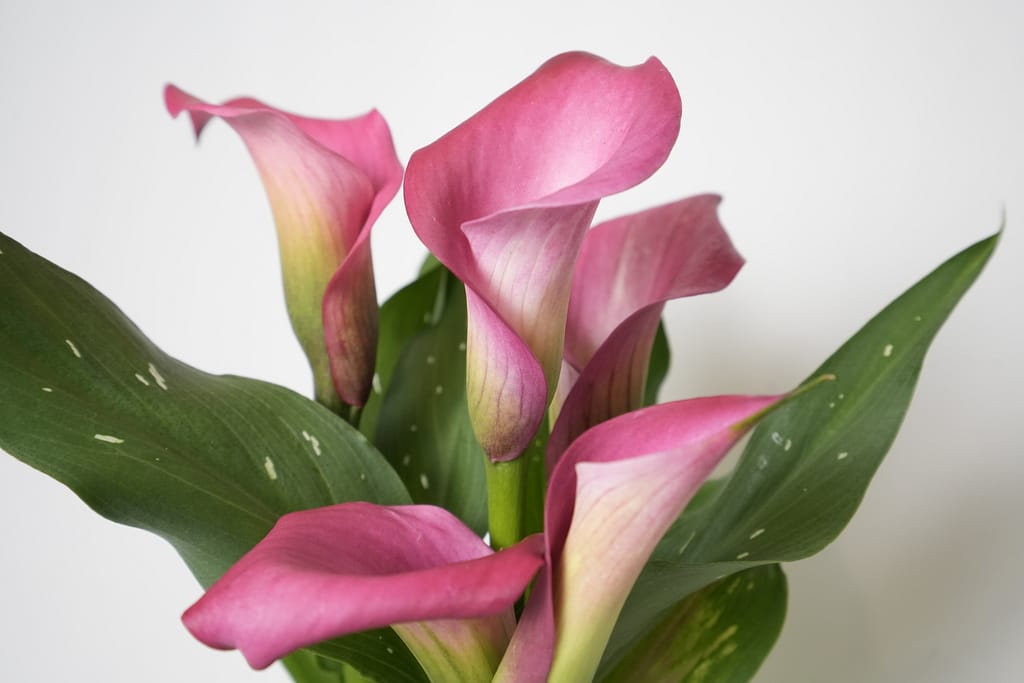
Outdoor calla lilies still require moisture management. Water deeply, then allow the surface to dry slightly before watering again. Increase watering during hot, dry periods and reduce it during extended rain. Mulch helps stabilize moisture and soil temperature but does not fix poor drainage. Drainage must be addressed first.
Planting and Soil Requirements
How to Plant Calla Lilies: Rhizomes, Timing, Depth, and Spacing
Calla lilies can be planted from rhizomes or transplanted from nursery pots. Outdoors, wait until frost risk passes and soil warms. For earlier growth, start indoors and move plants outside once nighttime temperatures remain mild.
Plant rhizomes with the smooth side down and growth points facing up, 1.5–4 inches deep depending on soil texture. Heavier soils require shallower planting to reduce rot risk. Space plants to improve airflow and allow foliage to dry quickly after watering or rain.
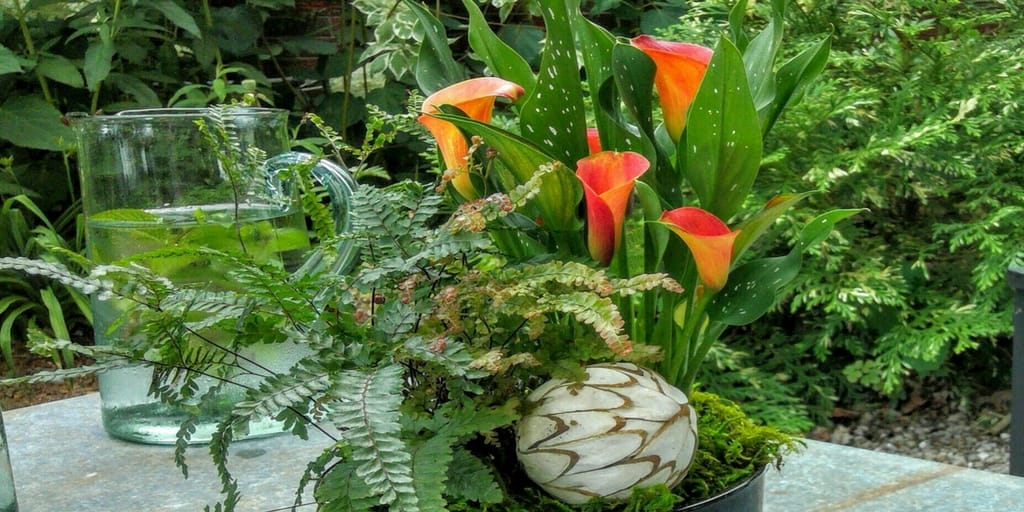
Soil Mix Requirements for Healthy Calla Lily Care
Calla lilies prefer soil that holds moisture while draining efficiently. Many problems blamed on fertilizer stem from compacted, waterlogged soil.
Use a well-draining potting mix for indoor plants and amend outdoor beds with compost to improve structure and aeration. Soil should remain slightly acidic to neutral (pH 5.6–6.5). Avoid excess nitrogen, which encourages leaf growth at the expense of blooms.
Soil targets for calla lily plant care:
Feeding, Maintenance, and Seasonal Care
Fertilizing Calla Lilies for Strong Blooms
Feed during spring and summer, apply every 2–4 weeks while actively growing, stop once flowers begin fading
Balanced 10-10-10 for overall health
Bloom-focused formulas higher in phosphorus or potassium to support flowering
Avoid high-nitrogen feeds if your goal is blooms. Too much nitrogen often leads to large leaves and fewer flowers.
Pruning, Deadheading, and Maintenance That Improves Blooming
Calla lilies do not need heavy pruning. They do benefit from clean maintenance.
Deadheading keeps the plant tidy and prevents energy loss into seed production. Removing damaged leaves improves airflow and reduces disease pressure, especially outdoors.
If you cut, use clean snips. If you pull, pull carefully so you do not tear healthy tissue near the base.
Common Problems and Plant Health
Why Calla Lilies Stop Blooming and How to Fix It
Blooming problems almost always link to a few repeat causes. Fixing the root cause usually restores blooms in the next cycle.
| Problems | Solutions |
|---|---|
| Not enough light | Move to brighter indirect light indoors, avoid deep shade outdoors |
| Watering swings | Water when the top soil dries, improve drainage, avoid standing water |
| No dormancy | Let the plant rest, store rhizomes cool and dry, restart in spring |
| Pot and planting issues | Use a pot with drainage holes, avoid oversized pots that stay wet, plant rhizomes at a stable depth. |
Common Calla Lily Pests and Diseases
Outdoor calla lilies face more pest pressure than indoor plants. Aphids, spider mites, mealybugs, thrips, and slugs can cause sticky residue, stippling, webbing, or leaf damage. Prevention focuses on regular inspection, airflow, spacing, rinsing foliage, and using insecticidal soap when needed.
Diseases such as root rot, gray mold, and powdery mildew usually result from excess moisture and poor airflow. Proper drainage and controlled watering prevent most issues.
Managing Calla Lily Dormancy Indoors and Outdoors
Dormancy is essential for long-term health. After flowering, reduce watering and allow foliage to yellow naturally. Once growth ends, store rhizomes in a cool, dark, dry space at 4–10°C (40–50°F) for 2–3 months.
In Canada, lift rhizomes before frost, dry them briefly, and store with airflow. Skipping dormancy often leads to weaker growth and fewer blooms.
Safety, Uses, and Practical Considerations
Calla Lily Safety: Pets, Children, and Handling
Calla lilies are not safe for pets and should be treated as toxic if chewed or ingested. Sap can irritate skin and eyes. Keep plants out of reach of pets and small children. Wear gloves if you have sensitive skin and wash hands after handling.
How to Use Calla Lilies Indoors and Outdoors
Calla lilies work well as indoor flowering plants and as outdoor container features. They also work in garden beds during summer when soil drains well and frost risk is not present.
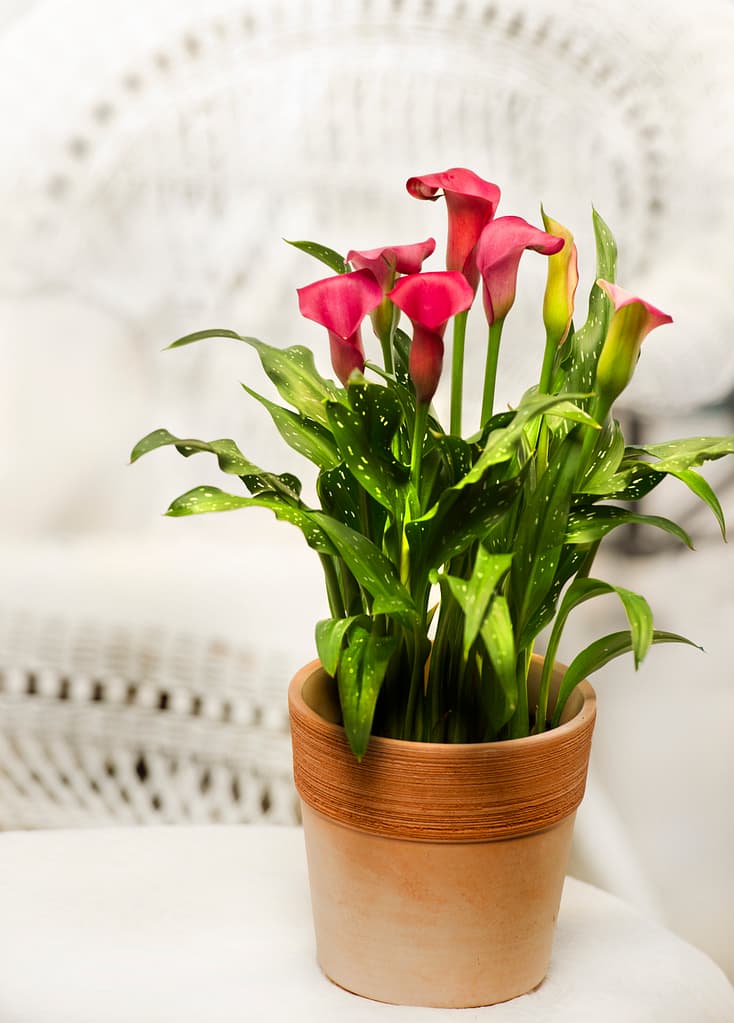
Indoor placement ideas:
-Bright window location with filtered sunlight
-Areas away from heat vents and drafts
-Spots where you can monitor soil moisture easily
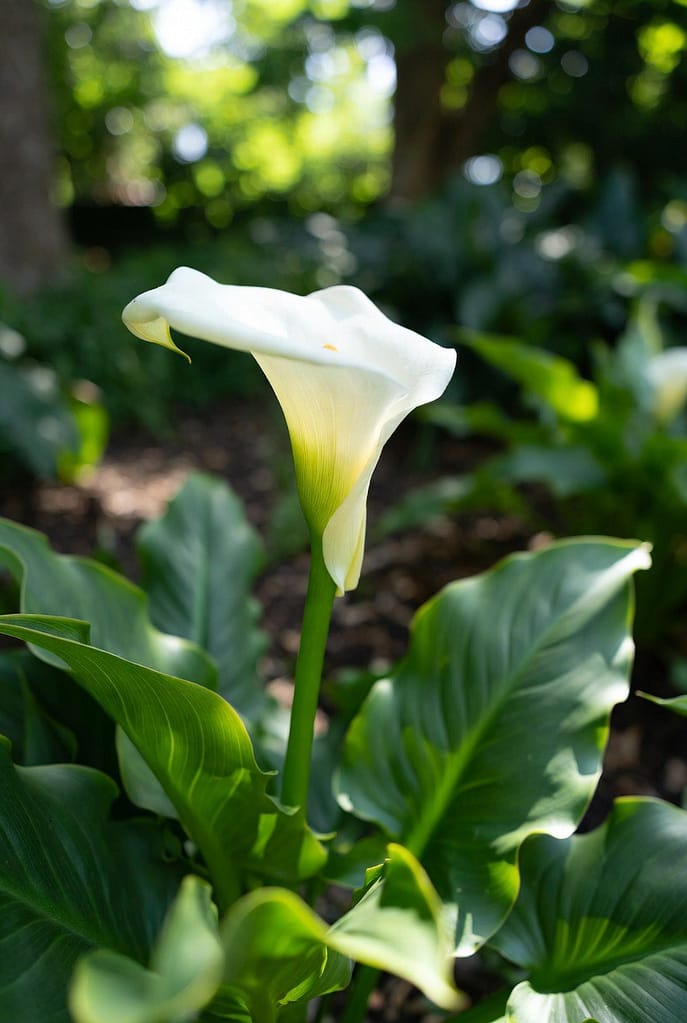
Outdoor placement ideas:
– Patio containers where you can control watering
– Borders with morning sun and good drainage
– Grouped plantings for colour blocks and clean structure
Calla Lily Plant Care FAQ
How long do calla lilies bloom?
Many calla lilies bloom for 6–12 weeks depending on light, temperature, and watering consistency.
Do calla lilies come back every year?
They return when rhizomes survive winter and dormancy happens properly. In cold climates, that means lifting and storing rhizomes.
Do calla lilies grow well in pots?
Yes. Containers allow better control over drainage and watering, which improves calla lily care indoors and outdoor container growing.
Why are my calla lily leaves turning yellow?
Yellowing usually points to watering problems, poor drainage, or too much direct sun. Check soil moisture and drainage first, then adjust light.
Should I mist my calla lily indoors?
Do not mist as a substitute for proper watering. Use stable moisture, airflow, and vent-free placement to reduce stress.